






Know Who Grows Your Food
I've been asking the same question for over two decades, just about different things.
A health scare in 2008 sent me back through every product on my counter, reading labels I'd never actually read, asking what was really in the things I put on my body every day. That question what is this, and who made it became Indie Lee the brand. It's plant intelligence, not deficit thinking: understanding your biology well enough to work with it, not around it.
Lately I've been coming back to the same question about our food, because of what's in the news right now.
There's a parasite called Cyclospora moving through several states this summer, traced back to shredded iceberg lettuce grown in central Mexico. As of the most recent count, it's linked to around 1,947 illnesses across nine states no deaths reported, most people recover on their own. The lettuce was recalled. There was a brief moment where a lab retraction made it look like the case had unraveled, but the FDA was clear: the epidemiology still points the same direction, and the recall stands. One sample changed, not the whole trail.
I'm not telling you this to worry you. I'm telling you because it's a useful reminder of something I already believe: the shorter the distance between you and your food, the more you actually know about it.
A quick, non-scary fact: this particular parasite doesn't rinse off the way dirt does. Washing still matters, I'll get to how, but heat is what actually handles it. Cook it when you can, peel it when you can't. That's it. No need to panic-inspect your produce drawer.
The real fix isn't a better rinse. It's a shorter chain.
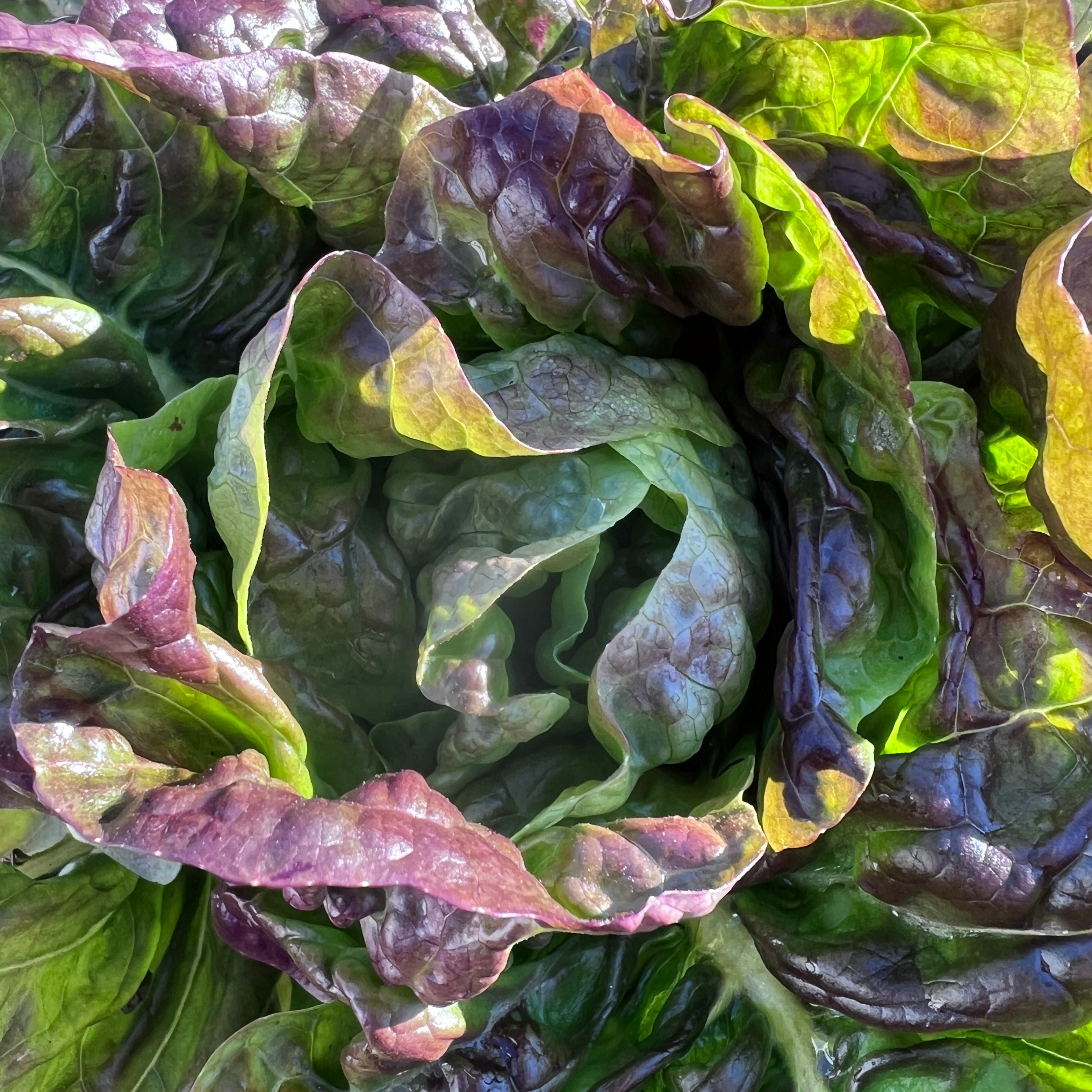
Think about how far a bag of pre-washed salad travels before it lands in your kitchen. Different farms, sometimes different countries, dozens of hands, days on a truck. Every one of those steps is a place where you lose visibility. Now think about a head of lettuce from the farmer at your Saturday market, picked that morning. Fewer hands. A face you can actually ask a question to.
That's the whole case for coming back to the garden, and it's not about doing it perfectly or going off-grid. Grow what you can. Shop your farmers market. Look into a CSA a share of a local farm's season, delivered as a box of whatever grew that week (I'll link a few ways to find one near you below). None of this makes you invincible. Local food isn't magic. But it shortens the chain, and a shorter chain is one you can actually trace.
And yes, still wash everything. At minimum, rinse under plain running water; that alone lifts off a good amount of what's on the surface. Rub the firmer produce with your hands, use a clean brush on thick-skinned things like melons and cucumbers, rinse before you peel so your knife doesn't drag anything inward, and dry with a clean towel, which removes even more. Cut away any bruised spots, and wash your hands before and after.
If you want to go a step further, soak produce in water with a splash of white vinegar or a spoonful of baking soda, both lift more pesticide residue than water alone. Just hold the expectation loosely: no rinse, no soak, no ozone machine removes what a plant absorbed while it was growing, and none of it is proven to eliminate a parasite like this one. Use these because they genuinely help, not because they make anything bulletproof. Nothing does. That's biology, not a failure on your part.
I'm not saying any of this from a patio. I've actually grown food for a living. On our old property in South Salem, NY, I ran a greenhouse, cut edible flowers for Whole Foods, and grew greens and vegetables for local restaurants and markets. We moved to Putnam County about a year ago and we're rebuilding the soil now, an orchard and berry patches in progress. It's slow. The soil doesn't move on your timeline, and I've made peace with that.
So, when I say know who grows your food, I mean it the way I mean everything else I say about ingredients: for a long stretch, the answer was me. It can be you too, and it doesn't have to be the full version. One pot of basil on a windowsill counts.
Know what's in it. Know who made it. Keep it close when you can.
A few resources worth bookmarking:
-
CDC on Cyclospora: current outbreak information and symptoms at cdc.gov/cyclosporiasis
-
Find a CSA near you: LocalHarvest, an independent directory running since 1999, at localharvest.org/csa
-
Find a farmers market, farm stand, or pick-your-own: LocalHarvest again at localharvest.org, or the National Farmers Market Directory at nfmd.org
Read more
Summer has a way of making the decision for me. The light stretches longer. The pace loosens whether I planned for it or not. I find myself outside more, on the grass, in the garden, my face tippe...
The light has already started changing in the evenings (the sunsets are incredible). I'm enjoying all the fresh produce and flowers from the gardens and picking up some new stationery, like I do ev...