










Arnica
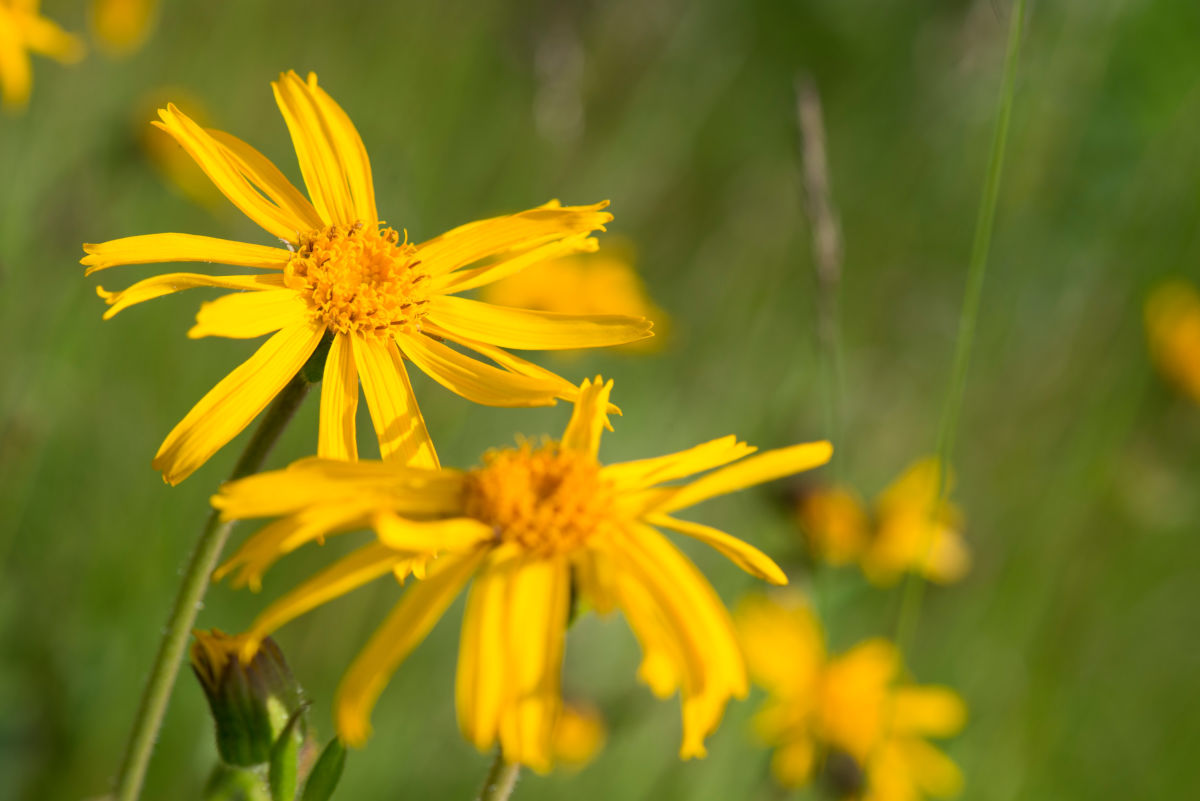
Family Compositae or Asteraceae. Arnica grows in sandy, well drained, granite or silica rich soil at high altitudes. This perennial plant produces bright yellow, daisy-like flowers during the summer and grows to about 2 feet high. The main part used is the dried flower. Since it is difficult to grow it has become a protected species in some parts of Europe. Geography: Native to the mountainous areas of Europe, South Asia and Russia.
Historical Uses
The first known mention of any use of Arnica was in the 12th Century. Its leaves and flowers were used as in compresses to reabsorb haematomas. During the 18th century, arnica became popular for its effect on bruises.Since the 18th century it was most often used (the dried flowers) as a topical anti-inflammatory in salves and ointments, compresses, gels, and creams that are applied to sprains, bruises, sunburns, rashes and wounds. It is an analgesic, anti-inflammatory, anti-ecchymotic (broken capillaries), anti-coagulator, anti-bacterial and anti-fungal. In skincare, these days, it is becoming increasingly popular for its microcirculatory benefits in under eye gels and creams that help improve the appearance of dark circles, under eye bags, crow's feet, wrinkles
Stories & Legends
According to European folklore, it was discovered when shepards noticed their injured animals gravitating to the plant. Johann Wolfgang von Goethe (1749-1832), the German philosopher and poet, drank arnica tea to relieve his angina. It is rarely used for this any longer due to the threat of toxicity. The name Arnica is believed to come from the latin word ptarmica (which means, to sneeze) because it is known to cause sneezing when freshly squashed or in dry powder form. French mountaineers used to smoke its leaves instead of tobacco.